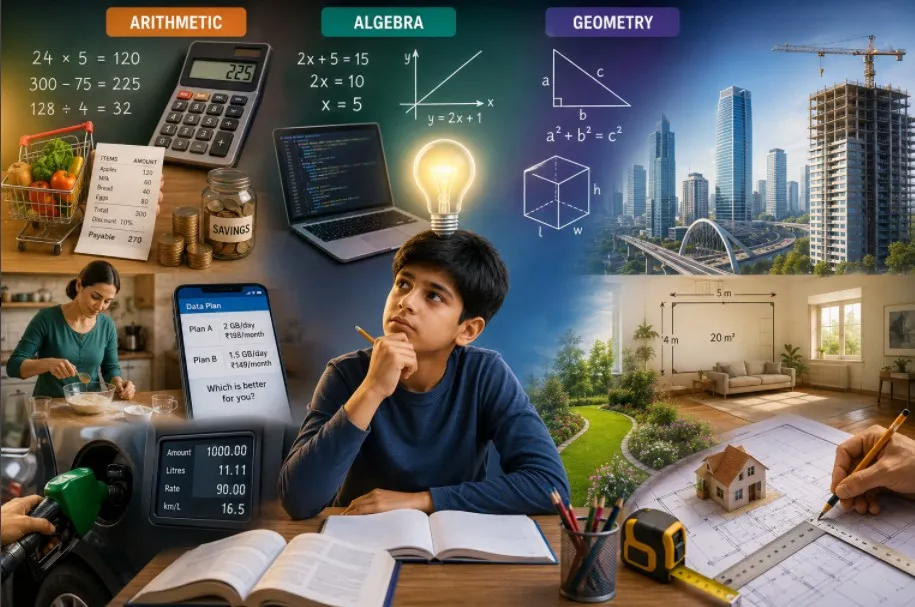
Numbers Are Not Just Digits - They Are the Beginning of Understanding Life
Before solving big problems, a child must first understand what a number truly means.
By Shwetha B R | 01, Apr, 2026 01:03 PM
Introduction: The Hidden Problem Most Children Face in Mathematics
Most children proudly count from 1 to 100 before they even enter primary school.
Parents smile. Teachers appreciate them. Everyone feels the child has learned numbers well.
But try asking a different question.
"What is the number 5?"
Many children pause.
Some point to the digit.
Some simply repeat, "Five".
Very few can explain that 'five' represents a quantity – five apples, five toys, five fingers, or five friends standing together.
This small moment reveals a much bigger truth.
Many children do not actually understand numbers. They simply remember them.
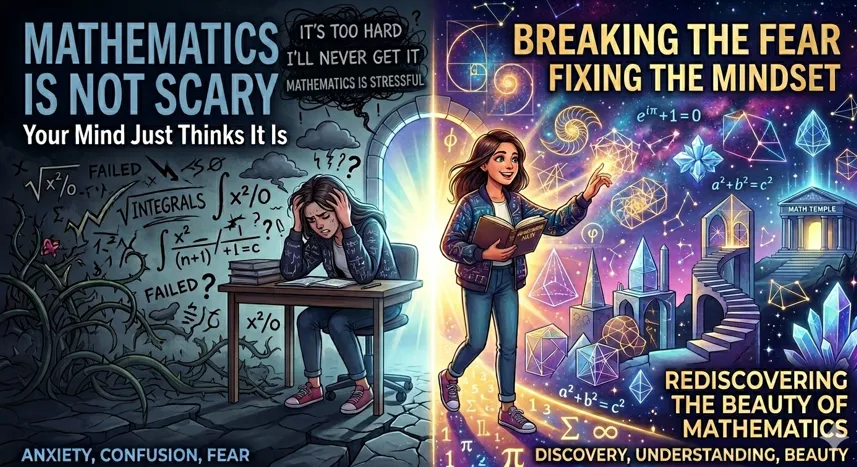
That may not seem like a problem in the beginning. But over time, it becomes the reason why mathematics starts feeling confusing, frustrating, and even frightening.
Children do not suddenly begin struggling with mathematics in higher grades. The struggle often begins much earlier – with the very first concept they learn.
And that concept is numbers.
When children truly understand numbers instead of merely memorising them, they build a foundation that supports every mathematical idea they will learn in the future.
What Is a Number – Really?
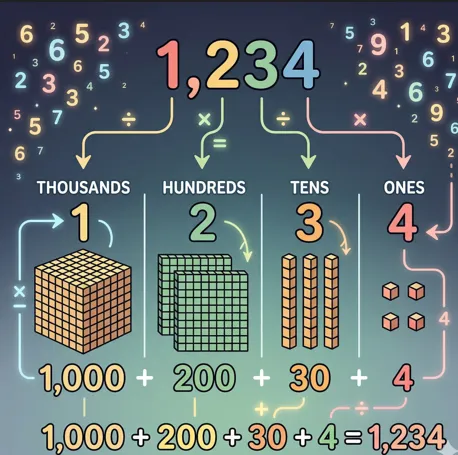
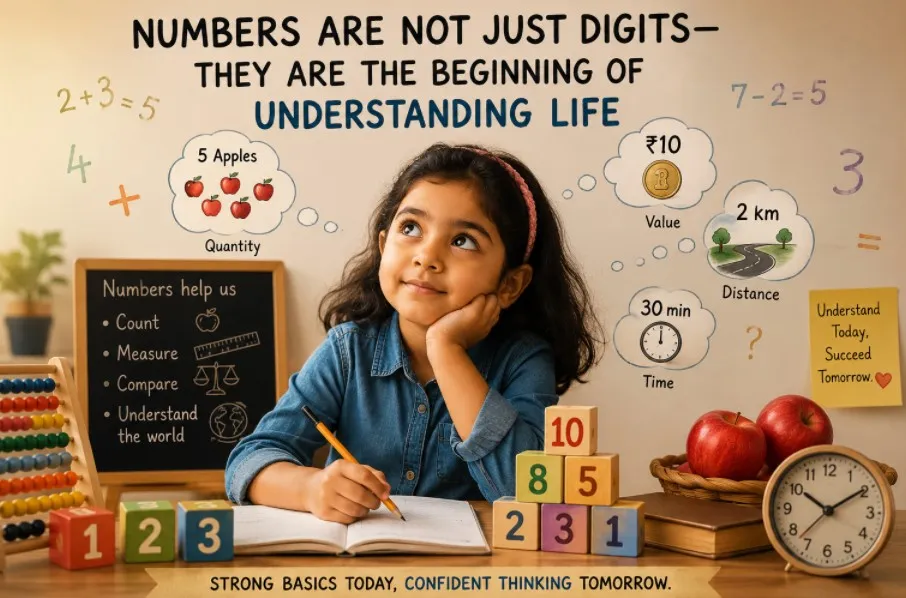
A number is much more than a symbol like 1, 2, 3, 4 or 10.
It helps us understand the world by answering questions like the following:
- How many?
- How much?
- How far?
- How long?
For example:
- 4 apples tell us the quantity.
- ₹20 tells us the value.
- 5 kilometres tells us the distance.
- 20 minutes tells us the time.
Numbers help children make sense of everyday life. When they understand this, mathematics becomes meaningful instead of confusing.
Why Memorising Is Not Enough
Many children can count quickly or recite multiplication tables, but that does not always mean they understand numbers.
Reciting numbers is like singing the alphabet song without recognizing the letters. It sounds impressive, but it does not build real understanding.
Children need to connect numbers with real objects and real experiences. They should be able to see, touch, compare, and imagine quantities, not just repeat them.
When understanding is missing, memorisation becomes a burden.
Where Children Begin to Struggle
In many classrooms, children are asked to:
- Write numbers repeatedly.
- Count faster.
- Memorise tables.
- Finish worksheets.
But we rarely ask an important question:
"Do they really understand what they are counting?"
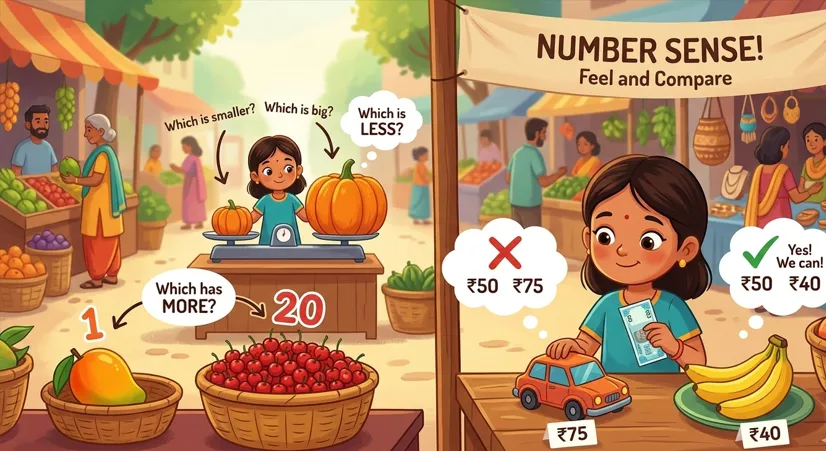
Can they imagine what 30 looks like?
Can they compare quantities without guessing?
Without this foundation, numbers remain symbols on paper instead of meaningful ideas. As mathematics becomes more advanced, confusion grows because the basics were never fully understood.
Every Type of Number Comes from Real Life
Instead of introducing difficult definitions, help children experience numbers through daily life.
- Natural numbers help us count objects.
- Whole numbers introduce zero when nothing is left.
- Integers explain situations like temperatures below zero or moving down floors in a lift.
- Fractions help us share a pizza, cake, or chocolate equally.
Every type of number exists because life needed a way to describe something.
The Psychology Behind Learning Mathematics
Children are not born afraid of mathematics.
Fear often develops when they are constantly rushed, compared with others, or made to feel that mistakes are failures.
A child who feels safe to ask questions develops curiosity.
A child who fears being wrong begins avoiding mathematics altogether.
Confidence grows when children understand concepts – not when they simply memorise answers.
What Parents and Teachers Can Do
Helping children understand numbers does not require expensive learning materials.
Simple daily experiences are enough.
- Count fruits while shopping.
- Measure ingredients while cooking.
- Count steps while walking.
- Use money during small purchases.
- Ask questions like, "Which is bigger? Why?" or "Can you show me another way to make 10?"
Most importantly, slow down.
Learning is not a race.
Children remember concepts much longer when they discover them themselves.
Speed is not learning. Understanding is learning.
Conclusion: Building a Strong Foundation for Lifelong Learning
Numbers are much more than the first chapter of a mathematics textbook.
They are one of the first tools children use to make sense of the world.
Every number carries meaning.
Every counting experience builds thinking.
Every real-life connection strengthens confidence.
When we teach children to understand numbers instead of merely memorising them, we are not only helping them succeed in mathematics – but we are also helping them become better thinkers, better problem-solvers, and more confident learners.
Because long before children learn to solve equations, they first learn to understand the world through numbers.
And when that foundation is strong, mathematics no longer feels like a burden.
It becomes a language they are excited to explore.
Author's Note
The greatest gift we can give a child is not the ability to memorise answers but the confidence to ask questions and understand ideas. Every mathematical concept grows from a simple beginning. If we nurture that beginning with patience, curiosity, and real-life experiences, children will discover that mathematics is not something to fear – it is something that helps them understand life itself.
A Thought to Remember
“A child who understands numbers will not fear mathematics – they will enjoy it.”