The Boy Who Watered a Dead Plant
A Heart Touching Moral Story About Patience, Kindness, and Hope
By Shwetha B R | 30, May, 2026 05:42 PM
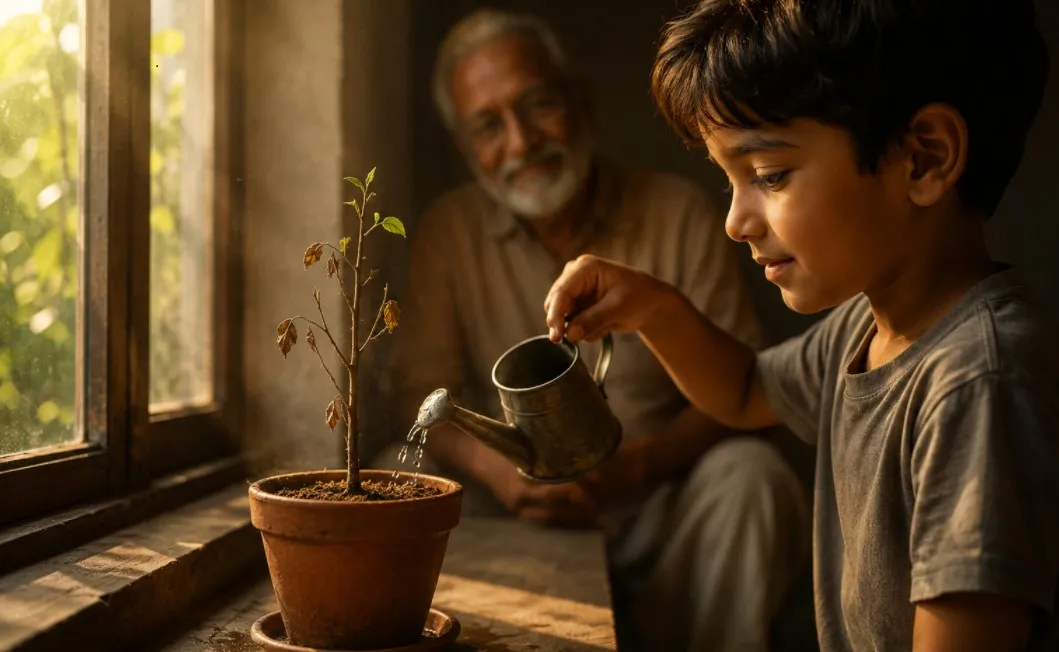
“A little patience, a little care, and life begins to bloom again.”
Sometimes, care and patience can bring life back to places where everyone else has already given up.
Today, many people give up too quickly.
If results do not come immediately, they stop trying.
If relationships become difficult, they stop caring.
If people do not change fast enough, they walk away.
But life does not always bloom instantly.
Some hearts need time to heal.
Some people need silent support.
Some situations change only after repeated acts of patience and kindness.
This simple story of a little boy and a dry plant carries a powerful message about hope, relationships, emotions, and the importance of never giving up too early.
Sometimes, what looks lifeless from the outside is still waiting for care to bloom again.
"Hope returns slowly, just like tiny leaves on a dry plant."
Sometimes, Life Blooms Late:
Every morning before going to school, Akul watered a small plant kept near the window.
He cleaned the pot carefully, removed the dry leaves, and shifted it toward the sunlight every day. Before leaving, he would softly say, “Grow well.”
But there was one problem.
The plant looked completely dead.
Its leaves had dried long ago. Its stem looked lifeless, and there was no sign of growth.
One day, his elder brother noticed him watering the same plant again and laughed.
“Akul, why are you wasting your time? That plant is dead.”
Akul quietly looked at the plant and replied, “Maybe, but watering it is making me a better person.”
His brother stopped smiling.
Days passed, but Akul continued caring for the plant without missing a single day.
Then one morning, their grandfather called everyone near the window.
Tiny green leaves had appeared on the dry stem.
The plant was alive.
Everyone felt surprised, but the grandfather smiled.
He softly said,
“Life responds differently to care. Some things bloom quickly, while some bloom late. But kindness never goes to waste.”
Then he looked at the children and continued,
“Human relationships are also like this plant. Sometimes people become emotionally dry because of stress, pain, failure, loneliness, disappointment, or harsh experiences. From outside, they may look cold, silent, angry, or broken. But when someone gives them patience, understanding, care, and genuine love, life slowly returns.”
The room became silent.
Looking at the tiny green leaves, Akul understood something very important that day.
Not every effort gives immediate results.
But sincere effort always changes something, either the situation or the person making the effort.
"Never stop watering what truly matters to you."
The Truth Hidden in Simple Things:
In life, many people stop trying too early.
Parents give up on children.
Children give up on parents.
Friends give up on friendships.
People even give up on themselves.
But real growth takes time.
A seed does not become a tree overnight.
Healing does not happen in one day.
Trust is not rebuilt instantly.
Sometimes, your patience may save a relationship.
Sometimes, your kind words may heal a hurting heart.
Sometimes, your consistency may bring hope back into someone who has almost lost it.
Never underestimate small acts of care.
Even when you cannot see immediate results, goodness is silently working beneath the surface.
And one day, life blooms again.
“What looks hopeless today may bloom tomorrow.”
Look Around-Someone May Be Waiting for Your Care
Not every dry plant grows in a flower pot. Some are hidden in our homes, schools, workplaces, and neighbourhoods. It could be a friend who has stopped smiling, a parent carrying silent worries, a child waiting to be understood, or someone who simply feels forgotten. They may not ask for help, but they still hope someone will notice them. A few kind words, a patient heart, or simply being present can make a difference. Just as Akul never stopped watering the plant, let us never stop showing care to the people who matter. Sometimes, your kindness becomes the reason someone finds hope again.
Takeaway from the Story:
Never stop doing good just because you cannot see quick results. Patience, kindness, and consistent care have the power to heal hearts, rebuild relationships, and bring hope back into life.
“Hope returns slowly, just like tiny leaves on a dry plant.”
Let’s Learn from Each Other
Thank you so much for taking the time to read this article.
If this story connected with your heart or reminded you of something in your life, we would truly love to hear your thoughts and experiences in the comments.
Sometimes, your feedback and personal experiences encourage us to write better and understand new perspectives on life and human emotions. More importantly, your words may inspire another reader who is silently going through a similar situation.
Who knows, your small experience or simple thought might help someone learn, heal, grow, and live better.
Thank you for being a part of Dhavish.