International Yoga Day 2026: Why the World Needs Yoga Every Day, Not Just on June 21
From Children to Seniors, Discover Why Yoga Has Become a Global Path to Health, Balance, and Well-Being
By Shwetha B R | 20, Jun, 2026 08:30 AM
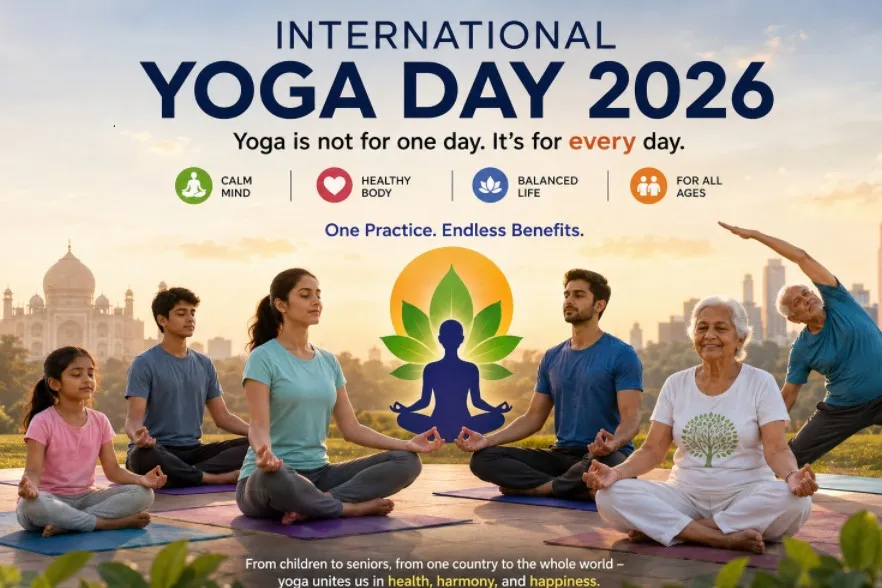
Yoga is the journey of the self, through the self, to the self.
- The Bhagavad Gita
The Pause We Forgot to Take
We charge our phones every day. We fuel our vehicles every day. We feed our bodies every day. But how often do we recharge our minds?
A few years ago, children spent their evenings chasing butterflies, climbing trees, and playing until sunset. Today, many spend their free time staring at screens. Adults are not very different. We wake up to notifications, rush through responsibilities, and go to bed carrying worries from yesterday and concerns about tomorrow.
Despite having more technology and convenience than any previous generation, many people feel stressed, distracted, and emotionally drained. Perhaps the greatest challenge of modern life is not a lack of information but a lack of pause.
We rarely pause to listen to our breath, understand our emotions, or reconnect with ourselves. This is where yoga becomes more relevant than ever, not merely as exercise but as a practice that helps us slow down, regain balance, and create space for clarity in a busy world.
A Gift from India to Humanity
Yoga originated in India thousands of years ago, yet its message has travelled far beyond geographical borders. Today, it is practised in schools in Japan, in parks in the United States, in offices in Europe, in homes in Africa, and in communities across the world.
The reason is simple. Stress speaks every language. Anxiety has no nationality. The desire for health, happiness, and inner peace is universal.
Although yoga was born in India, it no longer belongs to one country, religion, or culture. It belongs to humanity. It connects people across continents through a shared goal: the pursuit of physical, mental, and emotional well-being.
The Most Important Change Happens Inside
Many people associate yoga with flexibility and physical fitness. While these benefits are valuable, the most significant transformation often happens inside the mind.
Psychologists explain that the human brain frequently moves between regrets about the past and worries about the future. As a result, many people struggle to fully experience the present moment.
Yoga gently trains the mind to return to the present through movement, breathing, and awareness. Regular practice has been shown to reduce stress, improve concentration, strengthen emotional resilience, and support overall mental well-being.
In a world filled with constant noise and distraction, yoga offers something increasingly rare: the ability to be fully present.
From Childhood to Ninety Years and Beyond
One of the greatest strengths of yoga is its inclusiveness. It does not belong to any age group.
Children can use yoga to improve concentration, body awareness, and emotional balance. Teenagers can benefit from it while navigating academic pressure and social challenges. Adults often turn to yoga for stress management, fitness, and better health. Senior citizens can use it to maintain flexibility, mobility, and independence.
An inspiring example is V. Nanammal from Tamil Nadu, affectionately known as "India's Yoga Grandma". She learnt yoga from her father as a young girl and continued practising and teaching it for decades. Even after crossing the age of ninety, she remained energetic, active, and remarkably flexible. She trained thousands of students and inspired generations through her commitment to wellness. Her contribution earned her the Padma Shri, one of India's highest civilian honours.
Nanammal's life reminds us that health is not built through occasional effort. It is built through small, consistent actions repeated over time.
Why One Day Is Not Enough
Every year, millions participate in International Yoga Day celebrations on June 21. These events create awareness and encourage many people to begin their yoga journey.
However, the real value of yoga cannot be experienced in a single day.
Imagine eating healthy food for one day and expecting lifelong health. The same principle applies to yoga. Its benefits come from regular practice, not occasional participation.
Even fifteen to twenty minutes of daily yoga can improve physical fitness, emotional stability, focus, sleep quality, and overall well-being. The transformation does not happen overnight, but it happens steadily.
International Yoga Day is therefore not a destination. It is a reminder to begin or continue a habit that can benefit us throughout the year.
What the World Really Needs
Today, the world does not simply need stronger bodies. It needs calmer minds, more resilient children, more emotionally balanced adults, and more senior citizens who can age with confidence and dignity.
Yoga cannot remove every challenge from life. Deadlines will still exist. Problems will still arise. Difficult days will still come.
What yoga can do is help us respond to those challenges with greater awareness, patience, and clarity. Sometimes, changing the way we respond to life changes the quality of life itself.
The Real Celebration Begins Tomorrow
International Yoga Day is a meaningful global initiative, but its true purpose extends far beyond June 21.
The real celebration begins on June 22 and continues through every ordinary day that follows.
Yoga was never meant to be an annual event. It was meant to be a lifelong companion, a few minutes of movement, mindful breathing, and self-reflection that gradually strengthen both body and mind.
Perhaps the greatest gift yoga offers is not a stronger body or a more flexible spine. It is the ability to remain balanced in a world that rarely slows down.
This International Yoga Day, let us do more than celebrate yoga. Let us make it a part of everyday life, one breath, one practice, and one day at a time.
“We all wish for world peace, but world peace will never be achieved unless we first establish peace within our own minds.” - Geshe Kelsang Gyatso