Burnout Doesn't Happen Overnight: 10 Early Signs of Burnout Most People Ignore
Feeling tired even after sleeping? Losing interest in things you once loved? These subtle signs of burnout often appear long before a complete breakdown-and most people don't recognize them until it's too late.
By Shwetha B R | 29, Aug, 2026 11:17 AM
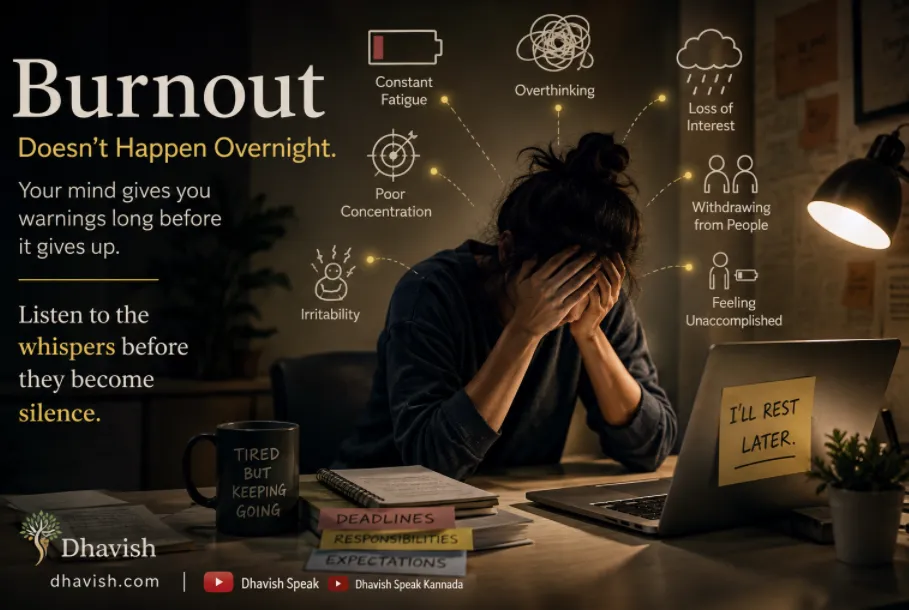
“I'm just tired.”
How many times have you said that without really thinking about it?
You sleep for eight hours yet wake up exhausted. A simple email feels like a difficult task. You smile when someone asks, “Are you okay?” because saying “I'm fine” is easier than explaining why your mind feels heavy.
Most people think burnout happens suddenly-a dramatic collapse after one terrible day.
But that's not how it works.
Burnout is quieter than that. It begins with skipped breaks, constant pressure, and the habit of saying, “I'll rest after this week.” Then, little by little, your patience becomes shorter, your joy becomes smaller, and your mind starts sending signals you don't even realize you're ignoring.
Psychology and neuroscience show that burnout is not simply about working too much. It's the result of prolonged stress keeping your brain and nervous system in survival mode for far too long.
The surprising part?
Your mind usually warns you long before it reaches its breaking point.
10 Early Signs Your Mind Is Asking for Help
1. You're tired even after sleeping
This is often the first whisper. Your body may get enough sleep, but your mind never feels refreshed. When stress stays high for too long, your nervous system struggles to fully recover.
2. Small tasks feel strangely difficult
Replying to one message. Folding clothes. Making a simple phone call.
These aren't suddenly hard because you've become lazy. Long-term stress drains mental energy, making everyday decisions feel heavier than they should.
3. You stop feeling excited
One of burnout's lesser-known signs is emotional numbness. Good news doesn't feel exciting. Bad news doesn't affect you much either. Your brain sometimes reduces emotional intensity as a way of protecting itself from constant overload.
4. Tiny things irritate you
A slow internet connection. Someone is asking one more question. A small mistake.
The problem isn't the situation. It's that your emotional battery is already running low.
5. You lose interest in things you loved
Your favorite music doesn't feel the same. Weekend plans seem tiring instead of exciting.
This doesn't always mean you've changed. Sometimes your brain is simply too exhausted to experience joy the way it used to.
6. Your focus keeps disappearing
You read the same sentence twice. Forget why you entered a room. Lose your train of thought mid-conversation.
Research shows that prolonged stress affects attention and working memory because your brain spends more energy managing pressure than processing information.
7. Your body starts speaking
Burnout doesn't stay inside your mind.
It often appears as headaches, neck pain, tight shoulders, digestive problems, or constant fatigue. Your body and mind are deeply connected, and one often speaks for the other.
8. You withdraw from people
You postpone calls. Cancel plans. Reply later.
Sometimes solitude is healthy. But when even talking feels exhausting, it may be a sign that your emotional reserves are running low.
9. You work more but feel less accomplished
You put in extra hours, yet the satisfaction never comes. Instead, your mind keeps saying, “I should be doing more.”
This cycle keeps stress alive because the finish line keeps moving.
10. You keep saying, “I'll rest later.”
After this project.
After this exam.
After this month.
This may be the biggest warning sign of all. Recovery keeps getting postponed while exhaustion quietly grows.
Why We Don't Notice It
Here's something fascinating about the human brain.
It adapts.
At first, stress feels uncomfortable. Then it slowly becomes normal. Just like people living near a busy road eventually stop noticing the traffic, we stop noticing how exhausted we've become.
The stress hasn't disappeared.
We've simply become used to carrying it.
That's why burnout often surprises people-they've been living with its early signs for months without realizing it.
Small Changes Can Make a Big Difference
Preventing burnout doesn't always require changing your entire life. Often, it begins with small moments of recovery.
Take a short walk without your phone. Eat one meal without rushing. Sleep consistently. Move your body, even for ten minutes. Talk honestly with someone you trust. And sometimes, protect your energy by saying “no” without feeling guilty.
These small habits help calm the nervous system before stress becomes overwhelming.
A Quiet Reminder
Burnout doesn't mean you're weak. It often means you've been carrying too much for too long without enough space to recover.
The strongest people aren't the ones who ignore exhaustion. They're the ones who learn to notice it early.
Your mind doesn't usually scream first.
It whispers.
The real question is: Will you listen before those whispers become silence?
Author's Note:
While writing this, I kept thinking about how many people quietly carry invisible exhaustion. We often praise people for working endlessly, but we rarely appreciate those who protect their peace.
If you recognized yourself in even one of these signs, don't ignore that feeling. Awareness is often the first step toward recovery.
If this article spoke to you, explore more psychology-based stories and life reflections on Dhavish, and share in the comments: Which early sign of burnout surprised you the most?