Can a Mother's Emotions Affect an Unborn Baby? The Psychology and Science Behind the Womb Connection
How a Mother's Emotions, Stress, and Mental Well-Being May Influence a Baby's Developing Brain
By Shwetha B R | 09, Jul, 2026 02:59 PM
Have You Ever Wondered...
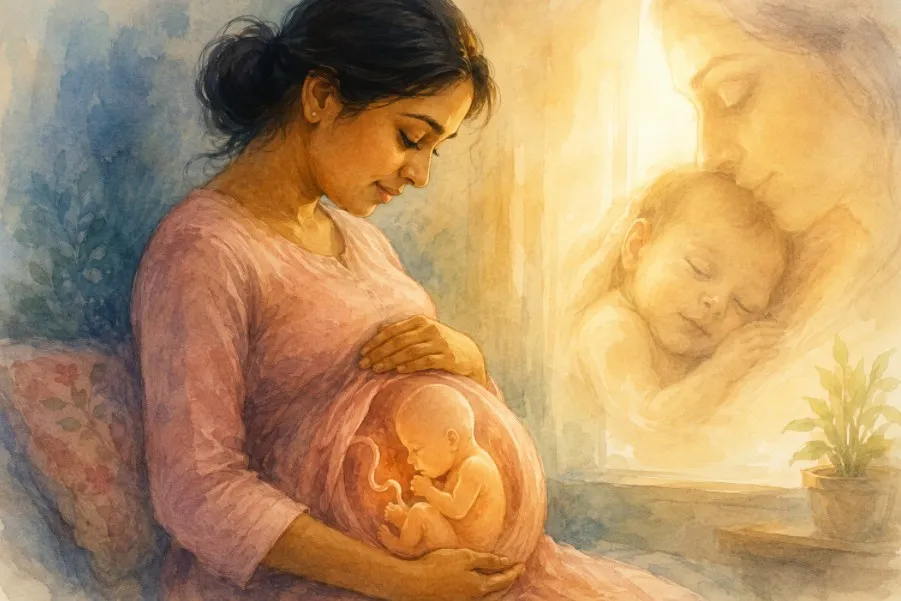
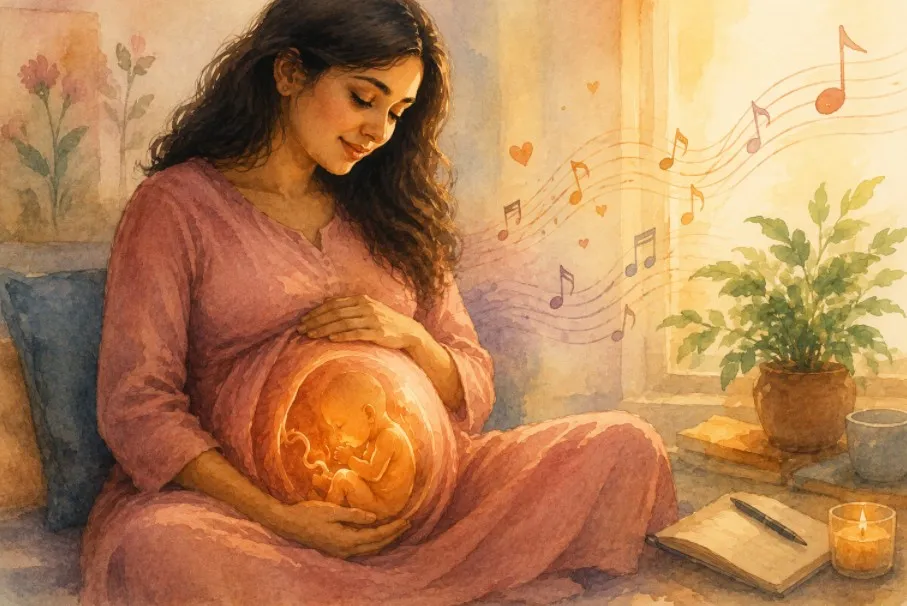
Have you ever seen a pregnant mother gently place her hand on her growing belly and quietly talk to her baby?
To someone watching, it may look like a beautiful emotional moment.
But could something much deeper be happening?
Can the baby sense that love?
Can they feel their mother's happiness... or her sadness?
For generations, people believed these were simply emotional beliefs. Today, psychology and medical research suggest there is more to this invisible bond than we once imagined.
The connection between a mother and her unborn baby is not magical.
It is biological.
It is psychological.
And it is one of the most fascinating relationships in human life.
Your baby does not hear your thoughts – but they feel your world.
One common misunderstanding is that babies can read their mother's mind.
They cannot.
An unborn baby does not know whether their mother is worried about money, family problems, or work.
What the baby experiences is the effect those emotions have on the mother's body.
Every emotion creates a physical response.
When you laugh, your breathing changes.
When you are frightened, your heart beats faster.
When you are calm, your muscles relax.
Pregnancy is no different.
The mother's body becomes the baby's environment.
That is how emotions become biology.
The Placenta Is More Than a Lifeline
Most people know that the placenta supplies oxygen and nutrients to the baby.
But very few know that it also acts as a communication bridge.
It helps carry hormones and other chemical signals between the mother and the developing baby.
This does not mean every emotion reaches the baby directly.
In fact, the placenta works hard to protect the baby from many harmful substances.
However, when a mother experiences severe or long-lasting stress, some stress-related hormones can cross this protective barrier.
This is one reason doctors encourage pregnant women to care for their emotional health as much as their physical health.
An Amazing Fact Most Parents Never Hear
Did you know that babies practise facial expressions before they are born?
With modern ultrasound technology, researchers have observed unborn babies yawning, smiling, swallowing, stretching, and even making expressions that resemble crying.
Their tiny brains are already practising movements they will use after birth.
Another surprising discovery is that babies develop sleep and wake cycles inside the womb.
Sometimes, when a mother thinks her baby is unusually quiet, the baby may simply be sleeping peacefully.
Life inside the womb is far more active than most people imagine.
Is It Harmful If a Mother Cries?
Many pregnant women worry after an emotional day.
"I cried today. Did I hurt my baby?"
The answer is reassuring.
No.
Crying once, feeling anxious before a medical check-up, or having a stressful week does not harm a healthy pregnancy.
Our bodies are designed to handle temporary emotional ups and downs.
The concern is not one difficult day.
The concern is months of constant emotional stress without support.
This is why pregnant women should never feel guilty for having emotions.
They should feel encouraged to seek support when those emotions become overwhelming.
The Hidden Problem: Mothers Who Suffer in Silence
One of the biggest psychological challenges during pregnancy is silent emotional pain.
Some women pretend they are fine because they do not want to worry their families.
Others believe asking for help makes them weak.
Some are surrounded by people yet still feel lonely.
Unfortunately, emotional struggles that remain unspoken often become heavier.
Sometimes, what a pregnant mother needs most is not another vitamin.
She needs someone who listens without judging.
Small Things That Make a Big Difference
Supporting emotional health during pregnancy does not require expensive treatments.
Often, simple daily habits have the greatest impact.
Spend a few minutes talking to the baby.
Listen to calming music.
Take slow walks if your doctor recommends them.
Share your worries with someone you trust.
Read uplifting books instead of constantly scrolling through disturbing news.
Most importantly, allow yourself to rest without feeling guilty.
Caring for your own mind is also a way of caring for your baby.
A Lesson from Nature
Think of a young plant.
Its future depends not only on the seed but also on the soil, water, sunlight, and care it receives while growing.
An unborn baby is much the same.
Genes provide the blueprint.
But the environment helps shape how that blueprint develops.
This is why scientists often describe pregnancy as one of the most important stages in human development.
What Every Family Should Remember
Pregnancy is not a journey that a mother should carry alone.
Every kind word spoken to her...
Every burden shared...
Every moment of understanding...
Creates a healthier emotional environment for both mother and baby.
A peaceful home is one of the greatest gifts a family can give an unborn child.
A Bond That Begins Before Birth
The connection between a mother and her baby cannot always be seen.
But it is there.
It grows with every heartbeat.
Every gentle touch.
Every hopeful dream.
Science continues to uncover how deeply connected they are, yet one truth has always remained the same:
When we care for a mother's emotional well-being, we are also investing in the future of the child she carries.
Coming Next
The Hidden Cost of Stress During Pregnancy: What Happens When a Mother Lives Under Constant Pressure?