More Than a Prayer: How Hanuman Chalisa Can Shape Young Minds, Reduce Stress, and Strengthen Emotional Well-being
A simple daily practice that helps calm the mind, build resilience, and bring lasting inner peace.
By Shwetha B R | 30, Aug, 2026 06:39 AM
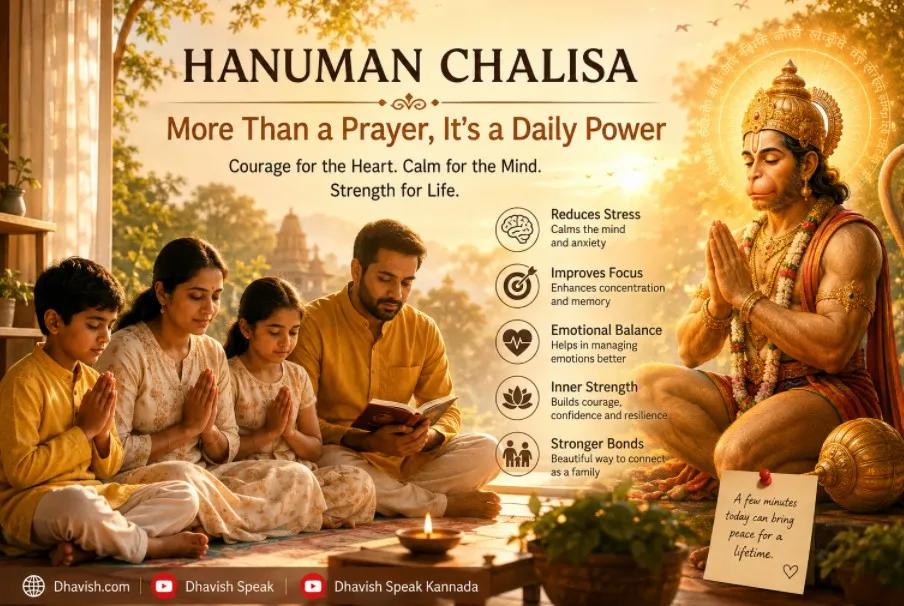
Have You Ever Wondered Why Millions Begin Their Day with Hanuman Chalisa?
A small child folds their hands.
A grandmother softly recites familiar verses.
A busy professional listens to it before leaving for work.
Across generations, one prayer continues to live in countless homes-the Hanuman Chalisa.
For many, it is an act of devotion.
For others, it is a source of peace during difficult times.
But beyond faith, could this simple daily practice help children become calmer, more confident, and emotionally stronger?
Modern psychology and neuroscience suggest that rhythmic chanting, controlled breathing, and meaningful repetition can positively influence the mind. While science does not claim that Hanuman Chalisa has supernatural powers, research supports many of the mental and emotional benefits associated with devotional chanting.
Perhaps that is why this 500-year-old prayer remains relevant today.
What Is Hanuman Chalisa?
The Hanuman Chalisa is a devotional hymn of 40 verses, written by the poet-saint Goswami Tulsidas in the 16th century.
It praises Lord Hanuman, known as the symbol of courage, devotion, wisdom, humility, and unwavering strength.
The word "Chalisa" comes from the Hindi word "chalis," meaning "forty."
For centuries, people have recited it seeking inner strength during fear, uncertainty, illness, examinations, and life's challenges.
Why Is Hanuman Chalisa Still Relevant Today?
Today's world is different.
Children face academic pressure.
Teenagers struggle with anxiety.
Adults constantly battle stress.
While Hanuman Chalisa may not solve every problem, it offers something many people desperately need-a few minutes of mental stillness.
Its rhythmic flow naturally slows breathing, encourages focus, and creates a moment away from endless distractions.
Sometimes peace begins with just five quiet minutes.
Life Lessons Hidden Inside Hanuman Chalisa
The prayer is filled with timeless values that children can carry throughout life.
1. Courage During Difficult Times
Hanuman crossed the ocean when others believed it was impossible.
The lesson is simple:
Confidence grows when we stop focusing only on obstacles.
Children who hear such stories often learn that fear does not have to decide their actions.
2. Humility Despite Great Strength
Hanuman possessed extraordinary power.
Yet he remained humble.
This teaches children that real greatness does not require showing off.
3. Discipline Creates Success
Hanuman never wasted his abilities.
He used them with purpose.
This reminds children that talent becomes meaningful only when supported by discipline.
4. Service Before Self
Throughout the Ramayana, Hanuman served others without expecting rewards.
It is a powerful lesson in kindness, responsibility, and compassion.
Why Teaching Hanuman Chalisa in Childhood Can Be Valuable
Children absorb habits more easily than adults.
When introduced gently-not through fear or force-but through stories, music, and family bonding, Hanuman Chalisa can become a meaningful daily ritual.
It Builds a Sense of Routine
Children feel emotionally secure when life has predictable routines.
A two-minute prayer before school or bedtime creates consistency.
It Improves Listening and Memory.
Memorising verses strengthens:
- auditory memory
- language skills
- concentration
- recall ability
Many educators recognise that memorising meaningful text exercises the brain in healthy ways.
It encourages emotional regulation.
Instead of reacting immediately to frustration, children gradually learn to pause.
That pause matters.
It often becomes the difference between anger and thoughtful action.
It Creates Family Bonding
When grandparents, parents, and children chant together, something beautiful happens.
It becomes less about religion.
It becomes about togetherness.
Those memories often stay for life.
What Science Says About Chanting
This is where faith and science meet in interesting ways.
Researchers have studied chanting, repetitive prayer, and meditation for years.
Although these studies are not specific proof of supernatural effects from Hanuman Chalisa itself, they show several measurable benefits of rhythmic chanting.
1. Chanting Can Reduce Stress
Slow, rhythmic recitation encourages controlled breathing.
This activates the body's parasympathetic nervous system, often called the "rest and relax" system.
As a result, many people experience the following:
- reduced stress
- slower heart rate
- greater calmness
2. Repetition Improves Focus
Repeating familiar words reduces mental clutter.
Instead of constantly jumping between thoughts, the brain focuses on a single pattern.
This resembles mindfulness practices used in modern psychology.
3. Deep Breathing Supports Emotional Balance
Many people naturally breathe more slowly while chanting.
Slower breathing has been linked with:
- reduced anxiety
- better emotional control
- improved relaxation
4. Sound Vibrations May Influence Calmness
Some studies suggest that humming and vocal chanting increase resonance in the body and stimulate relaxation.
While more research is needed, many people report feeling mentally lighter after devotional chanting.
The important point is this:
Science supports many benefits of chanting and mindful breathing, even though it does not scientifically verify miraculous claims associated with specific prayers.
Practical Benefits People Often Experience
Many devotees describe these everyday benefits from regular Hanuman Chalisa recitation.
- feeling calmer during stressful situations
- greater confidence before exams or interviews
- improved emotional resilience
- better sleep after evening chanting
- reduced negative thinking through positive focus
- stronger spiritual connection
These experiences vary from person to person, but the practice itself encourages healthy moments of reflection.
How Parents Can Introduce Hanuman Chalisa to Children
The goal should never be fear.
Instead, make it joyful.
Try these simple ideas:
- Play a gentle version during morning routines.
- Teach one verse each week.
- Explain the meaning through Hanuman's stories.
- Encourage children to ask questions.
- Celebrate progress instead of demanding perfection.
Children remember emotions more than instructions.
If the experience feels warm and meaningful, they are more likely to continue it willingly.
A Simple Daily Practice
You do not need an elaborate ritual.
Even five minutes can become meaningful.
Morning:
- Sit comfortably.
- Take three slow breaths.
- Recite Hanuman Chalisa mindfully.
Evening:
- Reflect on one good action from the day.
- End with gratitude.
Consistency matters more than duration.
The Real Power Lies Within
Whether someone approaches Hanuman Chalisa through devotion, culture, or personal reflection, its deepest message remains timeless.
Be courageous.
Stay humble.
Serve others.
Trust yourself.
And never give up when life feels difficult.
Perhaps that is why generations continue passing it from one child to another-not merely as a prayer to memorize, but to build a stronger heart and a calmer mind.
Author's Note:
For many years, I have found a sense of positivity and peace simply by listening to the Hanuman Chalisa. It became a quiet companion during both ordinary days and challenging moments.
Recently, I started chanting it along with my child, and I have noticed a meaningful difference in our daily routine. Those few minutes together feel calmer, more connected, and more peaceful.
Every person's experience is unique. But if you have never tried it, begin with a few minutes of listening each day, and when you feel ready, chant along. Sometimes the most meaningful changes begin with one simple daily habit.
I'd love to know- has the Hanuman Chalisa been a part of your life, or are you planning to start this journey? Share your experience in the comments.
-Shwetha B. R.
Dhavish.com | Dhavish Speak | Dhavish Speak Kannada